

Echoes of Creation
News, articles, and updates from Encounter GA
A Lenten Pilgrimage to the Capitol: Encounter, Advocacy, and Ecological Conversion
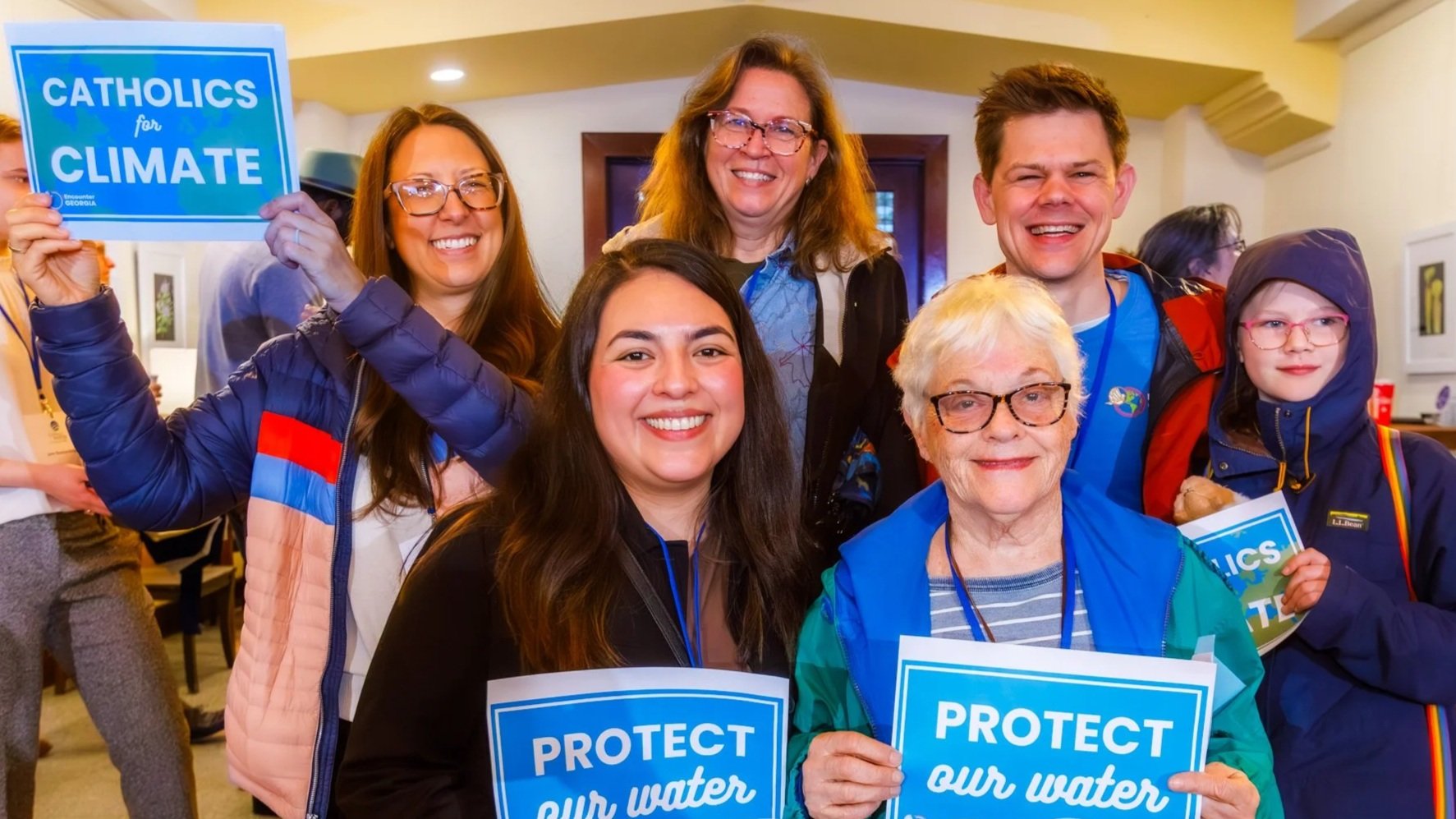
“You might want to grab a jacket,” I told my daughter. “It’ll be cold, and there’s lots of walking.”
“I’ll grab mom’s,” she replied.
I turned around, and there she was—my eleven-year-old suddenly looking grown up, wearing an adult rain jacket and headed to her first Capitol Conservation Day.
Rain meant rain jackets of course, but it also meant for a slow, traffic-filled ride down I-85. As we listened to Politically Georgia’s discussion of “Forever Stained,” the AJC’s recent investigation into the carpet industry and impact of PFAS chemicals on Northwest Georgia, we watched as car after car carved paths like a river splashing through a canyon into the city. It was morning in Atlanta, and we all had places to go, rain or shine.
SB 34: Data Centers, Rising Demand, and Our Duty to Creation
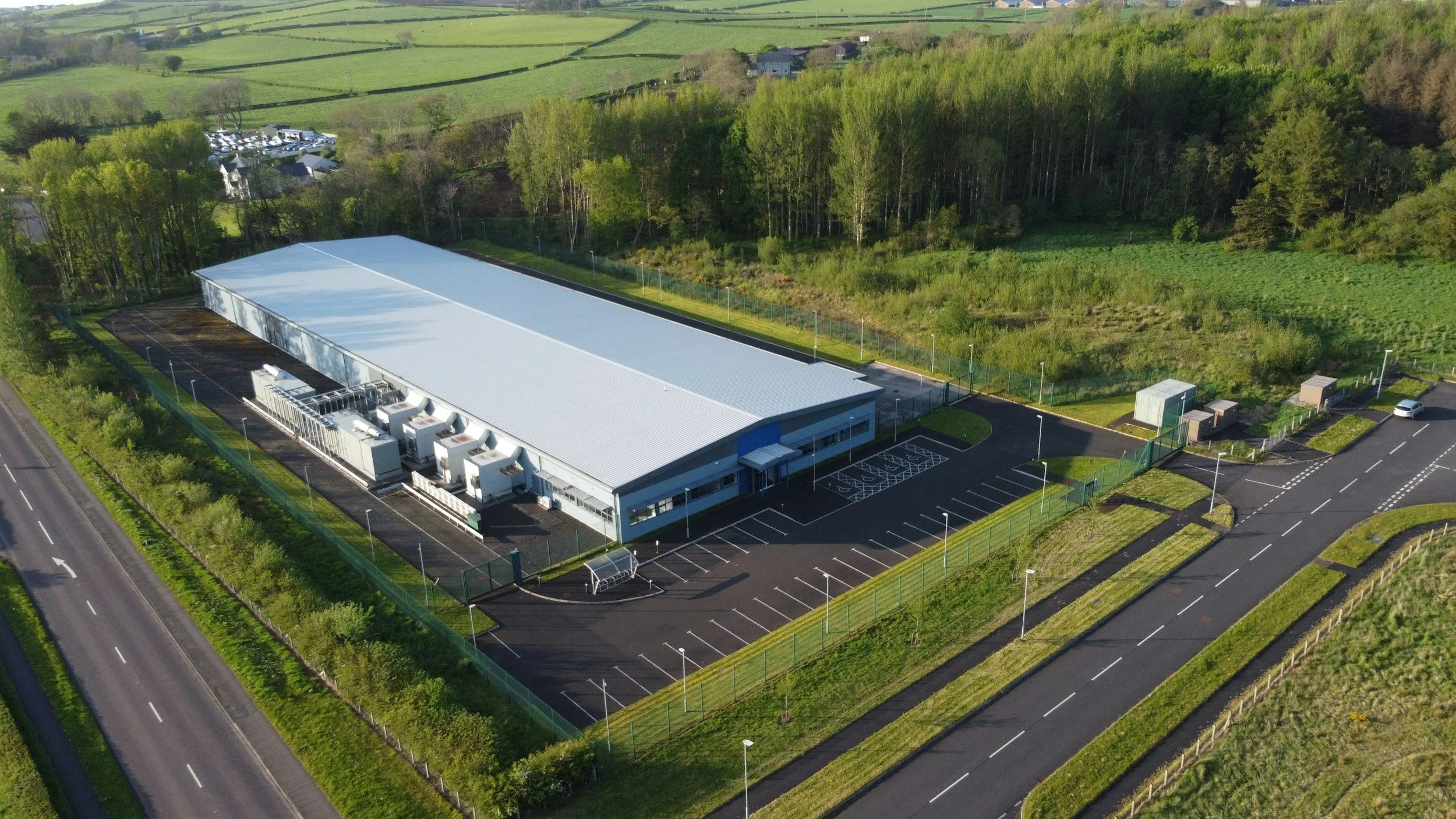
Georgia is in the middle of a quiet but profound transformation. Across the state, massive data centers are rising from former farmland and industrial corridors. These facilities power cloud storage, video streaming, cryptocurrency operations, and increasingly, artificial intelligence. And they are also becoming one of the largest new drivers of electricity demand in Georgia.
The rapid expansion has sparked a rare moment of bipartisan concern in the General Assembly. Lawmakers are debating a range of bills addressing data centers, including moratorium proposals, regulatory reforms, and changes to tax incentives. Among them is Senate Bill 34 (SB 34), which focuses on a deceptively simple but consequential question: who pays for the electricity infrastructure required to serve these facilities?
The Georgia PSC, Energy Growth, and a Lenten Call for Ecological Conversion
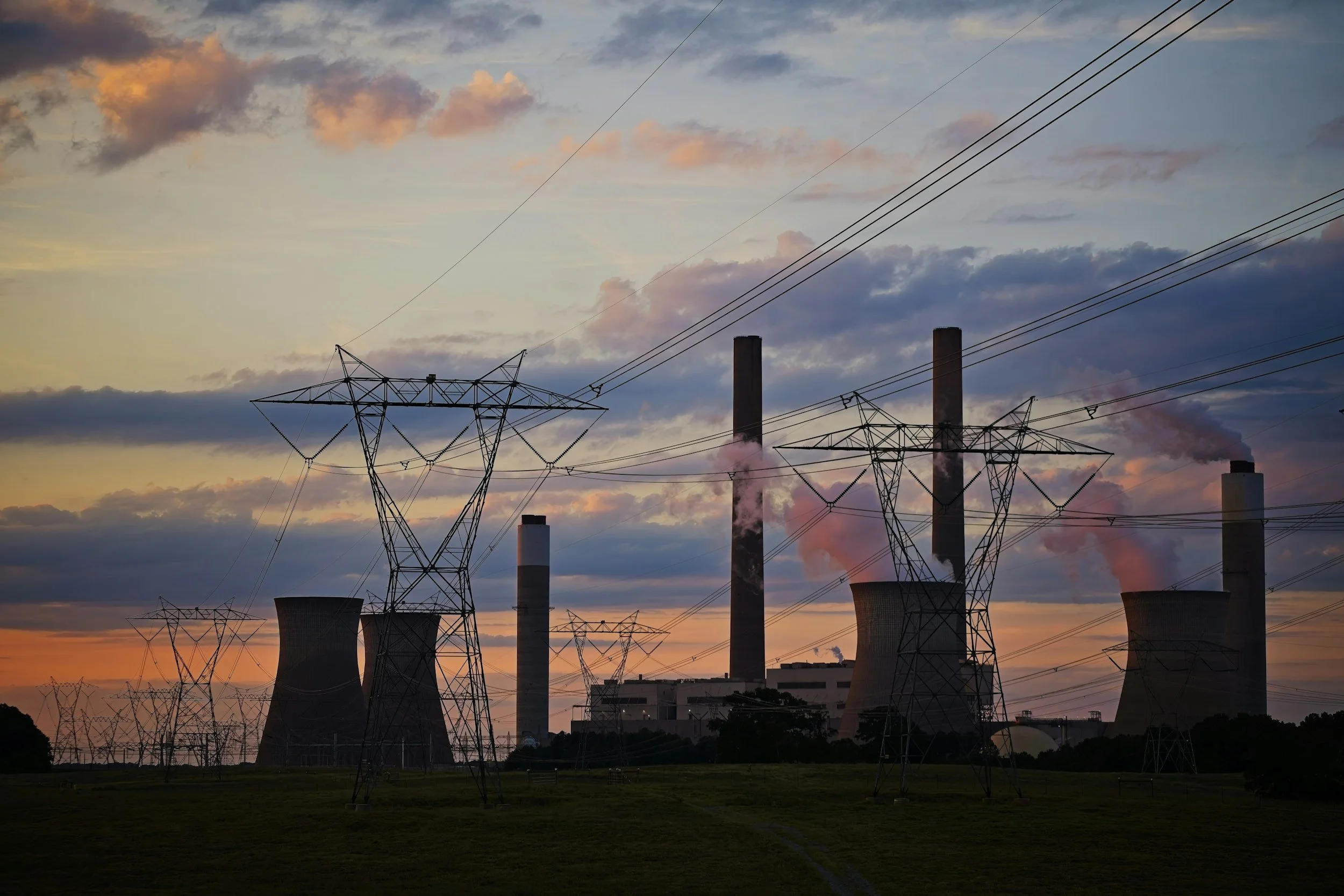
In the fall of 2025, the Georgia Public Service Commission approved Georgia Power’s latest Integrated Resource Plan, or IRP. The IRP is the utility’s long term roadmap for meeting projected electricity demand. It determines what kinds of power plants will be built, how much infrastructure will be added to the grid, and ultimately what customers will pay. This most recent plan was shaped heavily by one dominant factor: an unprecedented surge in projected electricity demand driven largely by data center expansion across the state.
Georgia Power told regulators that it expects rapid load growth in the coming years, much of it tied to new and proposed data centers. To meet that demand, the utility proposed adding thousands of megawatts of new generation.
Catholic Climate Covenant Releases Statement on Endangerment Finding
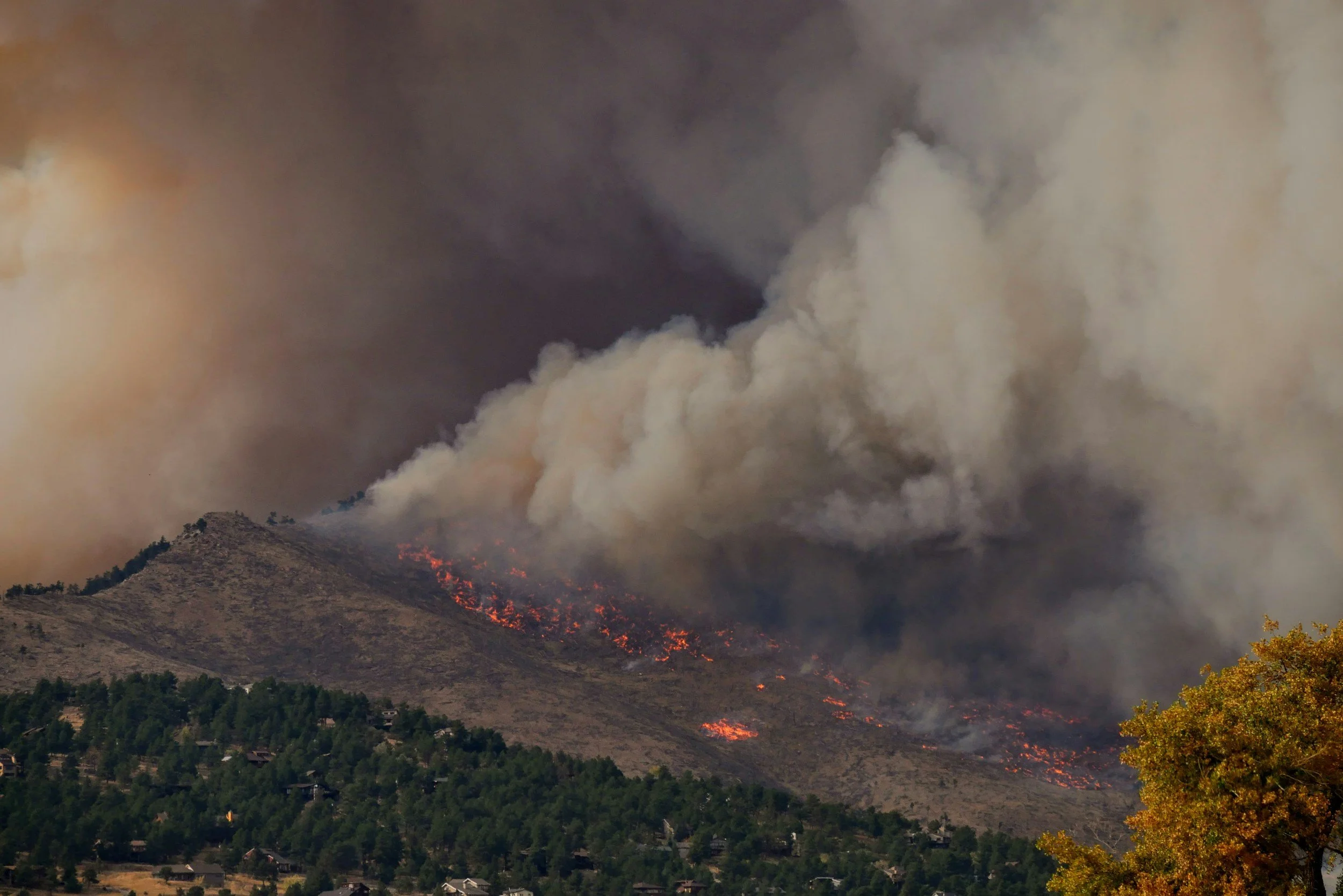
Today, the Environmental Protection Agency formally rescinded the 2009 endangerment finding on greenhouse gases. This finding represented the EPA’s scientific and legal determination that carbon dioxide and other greenhouse gases endanger public health and welfare and has been the cornerstone of nearly every major U.S. climate policy for more than a decade. It provided the legal basis for emissions standards on vehicles, limits on industrial pollution, and other protections designed to slow climate change and safeguard human health.
Without this foundational finding, the federal government no longer has a clear mandate to enforce limits on emissions from cars, trucks, power plants, and industrial sources. Regulation retreats into uncertainty, and protections that took years to build can be rolled back. Critics warn this will accelerate pollution, heighten public health risks, and expose current and future generations to even greater harm.

Turning Inward or Turning Away?
Why the U.S. Exit from the UNFCCC and IPCC Make State-Level Action in Georgia More Important Than Ever
In January 2026, the United States announced its withdrawal from the United Nations Framework Convention on Climate Change and the Intergovernmental Panel on Climate Change. These institutions have long formed the backbone of international climate cooperation and scientific assessment. Their purpose is simple but essential: to help nations understand the risks of climate change and coordinate responses to a challenge that affects the entire planet.
The UNFCCC, adopted in 1992, provides the framework through which countries negotiate climate commitments and assess collective progress. The IPCC brings together scientists from around the world to evaluate the best available climate research and present it in a form that policymakers and the public can understand. While these bodies do not set national policies, they shape the shared knowledge and dialogue that make coordinated action possible.
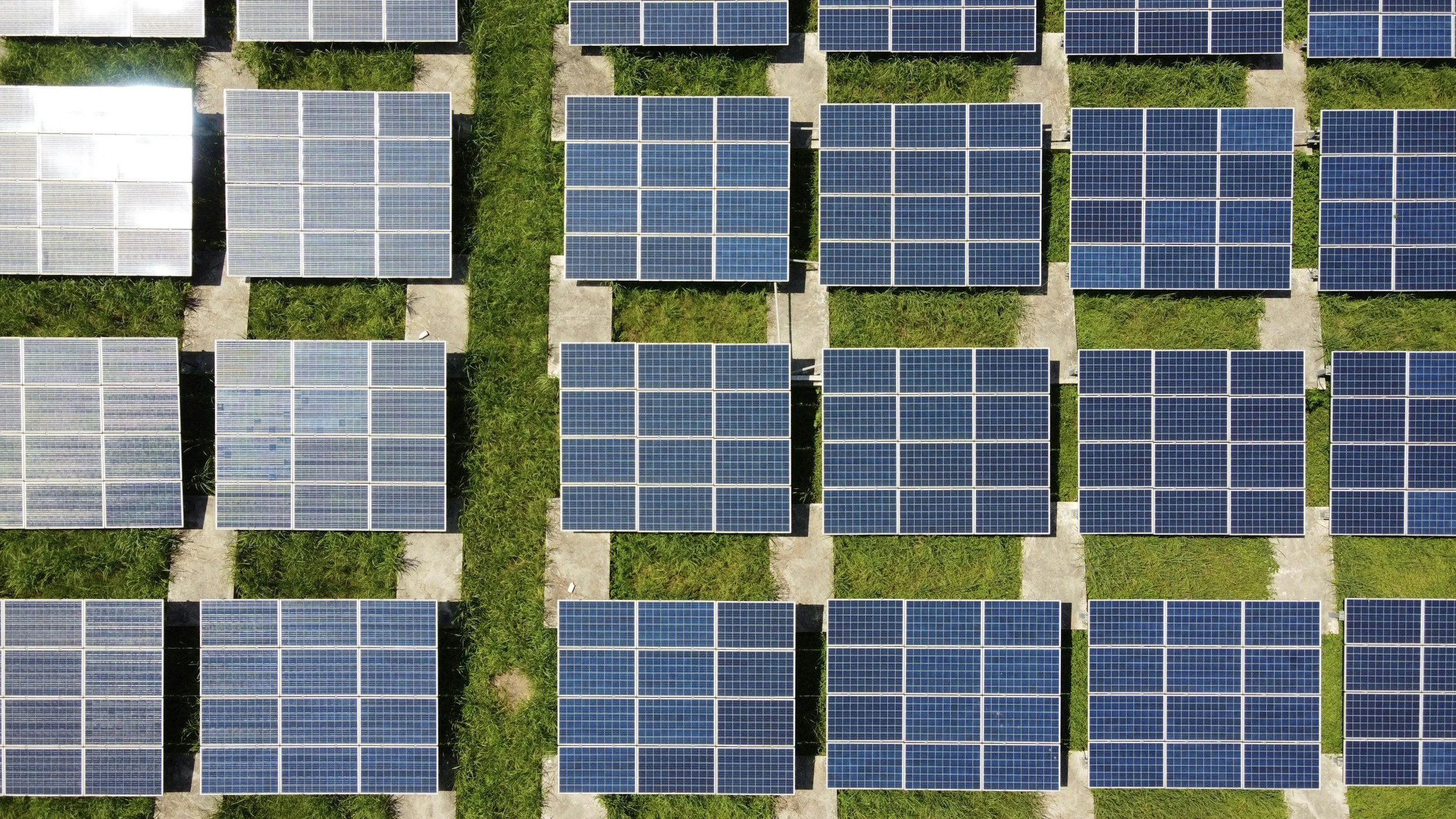
Why renewables shouldn’t be dismissed in nuclear discussion
I am not anti-nuclear and recognize that nuclear energy can play an impactful role in the generation mix, particularly when its use is defined within the context of overall system outcomes. My concern lies not with nuclear power itself, but with arguments presented that elevate its value over renewable energy based on a single criterion: dispatchable, firm generation.
In an era of rising electricity demand, increasing climate-driven extremes, and heightened reliability concerns, this framing is understandably appealing. Reliability matters. However, reducing the energy-planning question to dispatchability alone fundamentally misrepresents how modern electric systems operate and how reliability can be achieved most cost-effectively. It narrows the problem to a single attribute of generation while overlooking the broader set of tools and strategies that actually determine system performance.
Assessing the Environmental Impacts of the SSE4 Pipeline Project
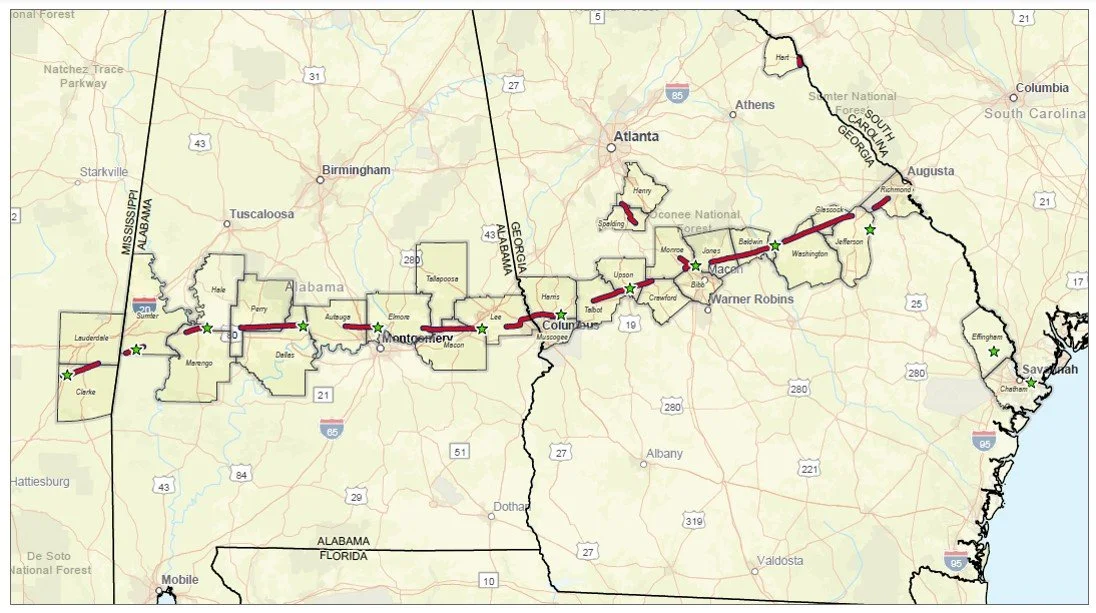
A new methane gas pipeline is proposed to cross Georgia. The South System Expansion 4 (SSE4) is a proposed natural gas pipeline expansion that would affect parts of Mississippi, Alabama, and Georgia. The project is being developed by Southern Natural Gas (SNG) and Elba Express, subsidiaries of Kinder Morgan, and is currently under review by the Federal Energy Regulatory Commission (FERC).
The proposed project will affect the following counties in Georgia: Harris, Talbot, Upson, Crawford, Monroe, Bibb, Jones, Baldwin, Glascock, Jefferson, Richmond, Burke, Screven, Henry, Spalding, Effingham, Lowndes, Clayton and Chatham.
IHM Social Justice Series Hosts Encounter GA Workshop
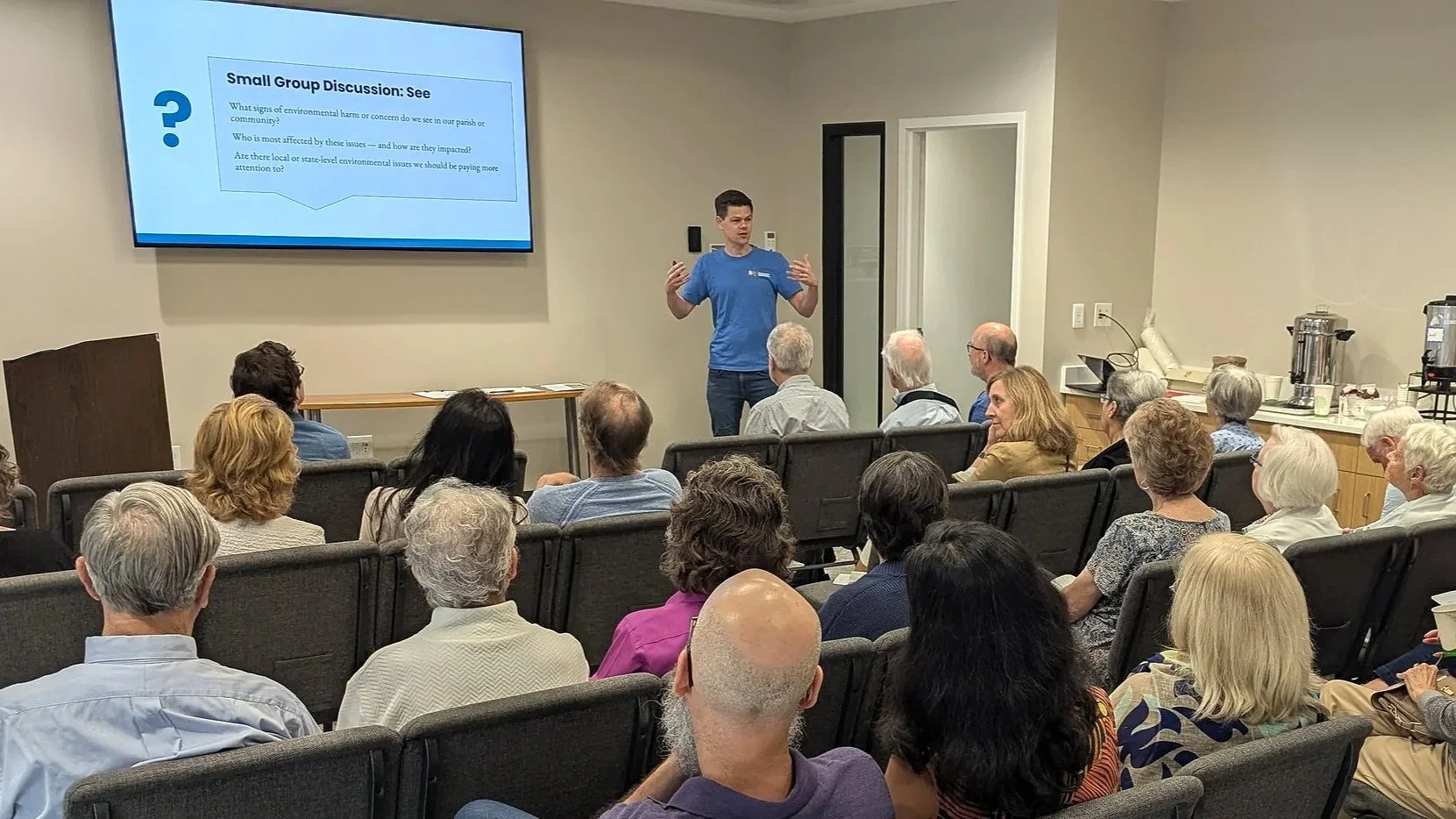
As a part of its social justice speaker series, Immaculate Heart of Mary Parish in Atlanta, GA, hosted an Encounter GA advocacy workshop. The workshop, hosted on September 28th, focused on nonpartisan advocacy strategies for individuals, families, and parish communities interested in responding to Pope Francis’s call in Laudato Si’ to care for creation.
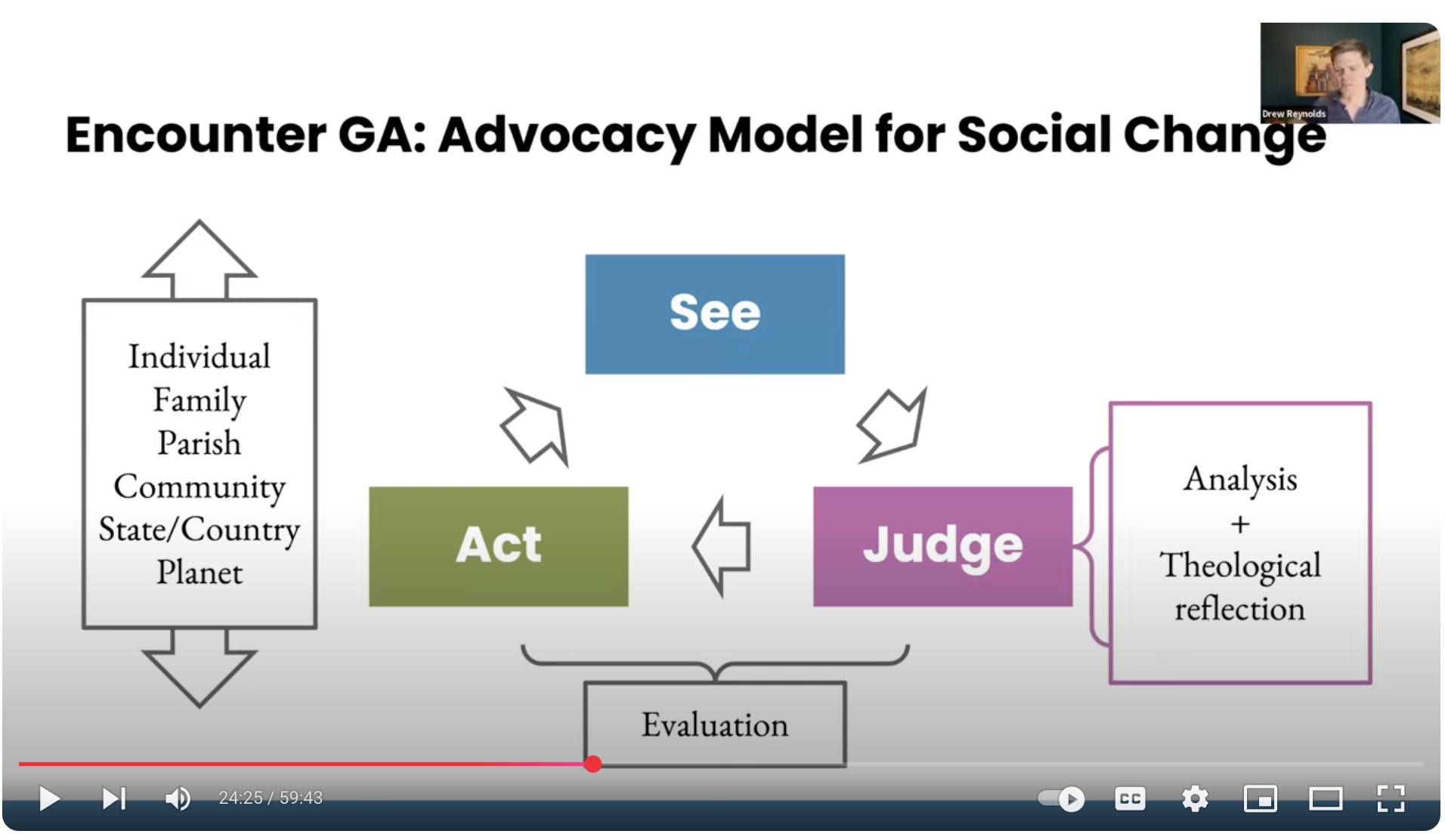
The workshop provides a brief overview of Catholic Social Teaching and scriptural teachings on the environment, and then invites participants to explore how they might respond using the See-Judge-Act model for social change.

Meet the PSC Candidate: Peter Hubbard
Our Meet the Candidates series invites those running for the Public Service Commission to share their perspectives on issues that matter deeply to Georgia’s Catholic community—and to all who care about environmental stewardship, justice, and the common good.
We are pleased to share unedited responses to Encounter GA questions from Peter Hubbard (D). Our hope is that these reflections will help Catholics as they exercise faithful citizenship in the upcoming election.
Election day is November 4th with early voting beginning on October 14th.
Meet the PSC Candidate: Tim Echols
Our Meet the Candidates series invites those running for the Public Service Commission to share their perspectives on issues that matter deeply to Georgia’s Catholic community—and to all who care about environmental stewardship, justice, and the common good.
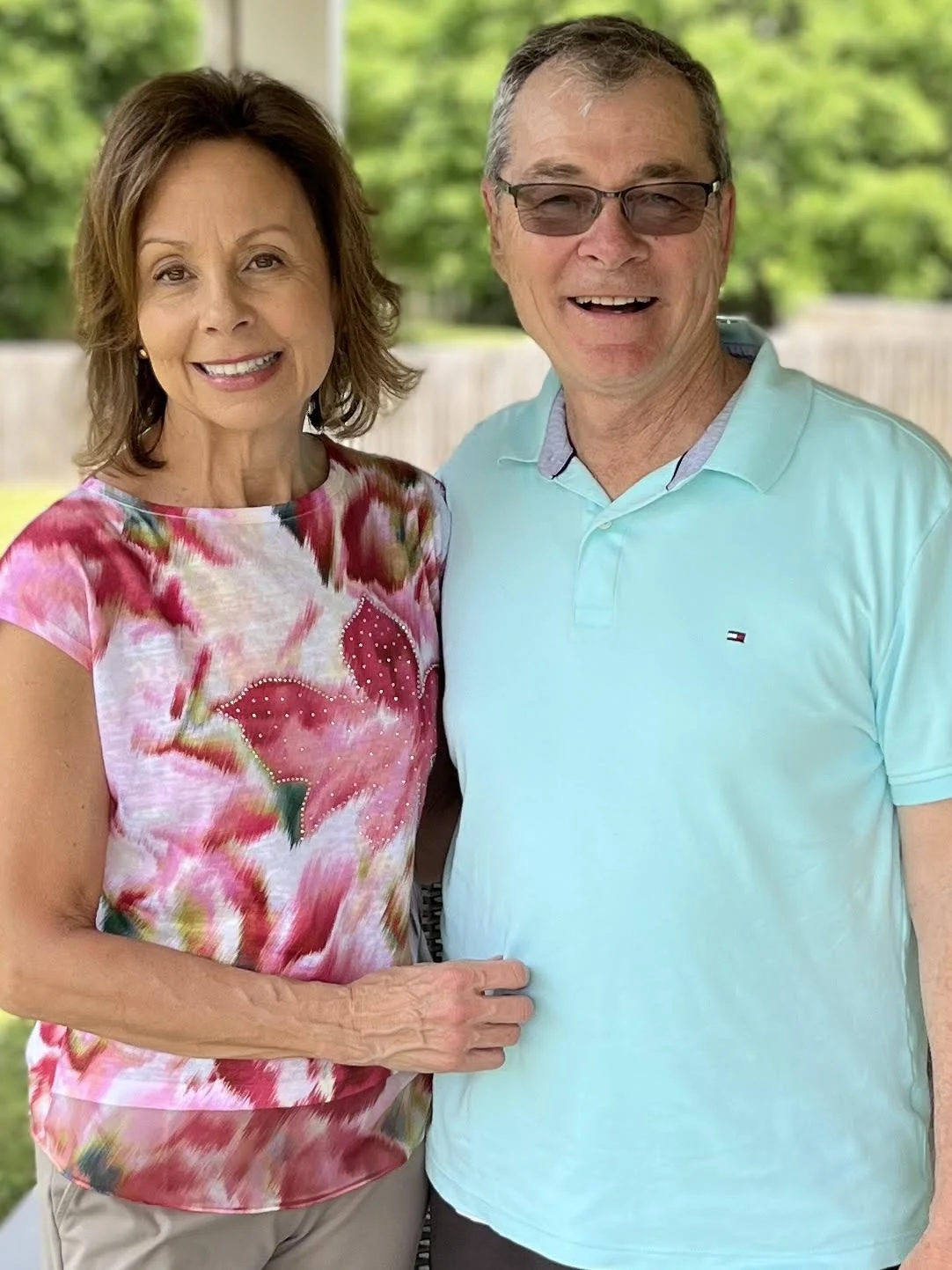
We are pleased to share unedited responses to Encounter GA questions from Tim Echols (R). Our hope is that these reflections will help Catholics as they exercise faithful citizenship in the upcoming election.
Election day is November 4th with early voting beginning on October 14th.

The Public Service Commission Election: Primer for Georgia Catholics
Our PSC Page includes voting information about the Public Service Commission Election (Nov 4, 2025) for Georgia Catholics to assist citizens as they make informed votes in light of Catholic Social Teaching. The page includes voting information, dates, and responses from candidates to Encounter GA questions.
As Catholics, we are called to care for creation and protect the poor and vulnerable. Pope Francis’s Laudato Si’ reminds us: “The climate is a common good, belonging to all and meant for all.” Our faith calls us to act for justice, sustainability, and the dignity of every person.

Why Rescinding the EPA’s Endangerment Finding Is a Moral Mistake
The EPA’s move to rescind the Endangerment Finding isn’t just a policy shift — it’s a moral failure. In Georgia and beyond, communities face rising seas, dangerous heat, and worsening air quality. Catholic Social Teaching and Popes Leo and Francis remind us that caring for creation and protecting the vulnerable are sacred duties. We must oppose this rollback and stand together for justice, science, and the common good. Sign the petition today.

Victory for Creation: A Historic Win for the Okefenokee
Today, Georgia witnessed a remarkable victory for our environment and for all those who believe in the moral call to care for creation. In a historic agreement, Twin Pines Minerals has agreed to sell more than 8,000 acres of land near the Okefenokee Swamp for conservation—effectively halting the proposed mining project that posed serious risks to one of the most ecologically and spiritually significant wetlands in North America.
Public Service Commission Primary Update - and What Comes Next
On June 17, Georgia voters took part in a long-delayed primary election for two seats on the state’s Public Service Commission (PSC), the five-member body responsible for regulating utilities like Georgia Power. Though Georgia voters might not be familiar with the PSC, its decisions have a real and lasting impact on our energy bills, our transition to renewable energy, and how utility companies serve Georgia communities.
New Resource: How to Train Your Parish for Environmental Advocacy
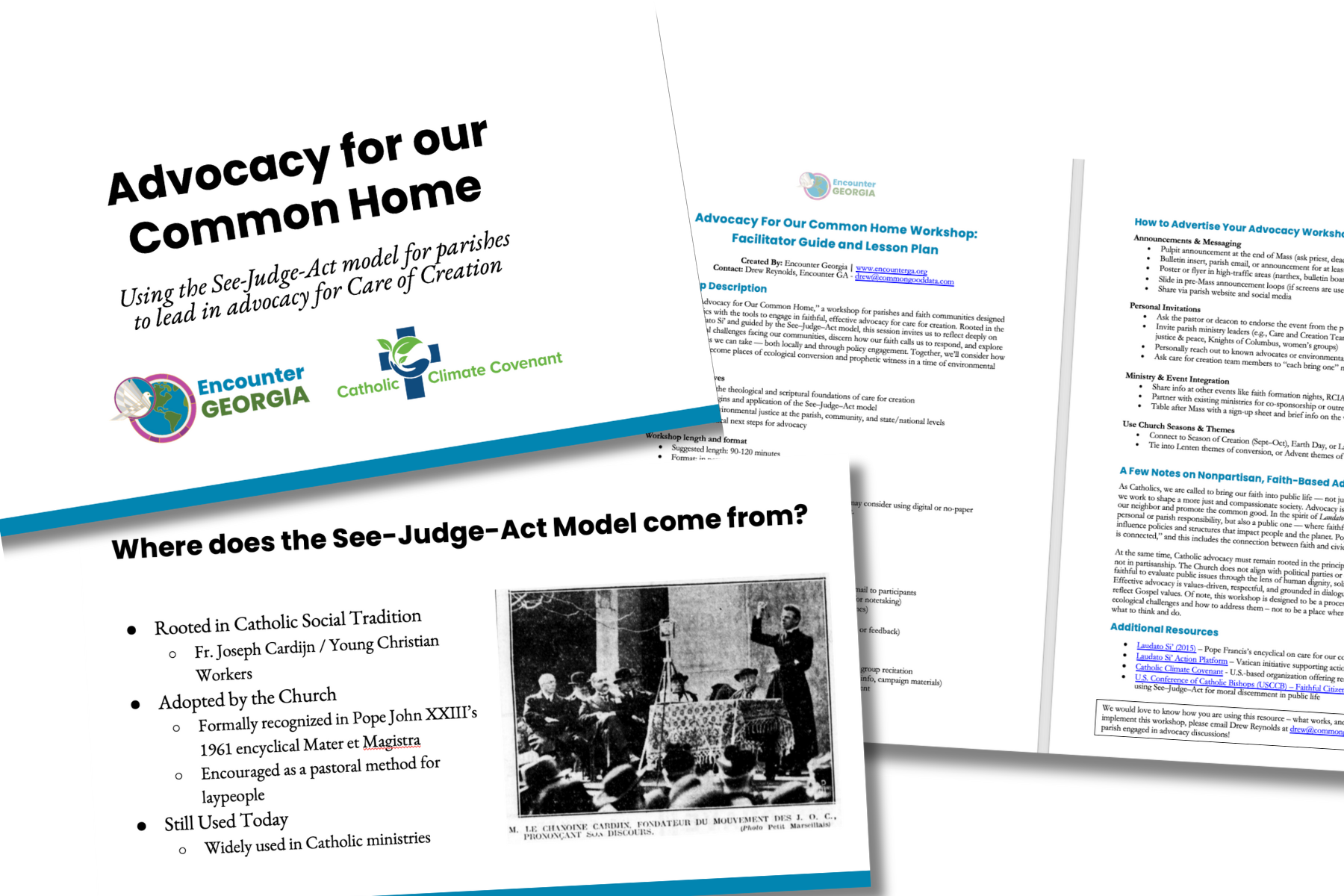
For Catholic parishes and lay leaders looking to deepen their commitment to care for creation, a new video resource from Catholic Climate Covenant offers practical guidance and inspiration. Titled How to Train Your Parish to Engage in Environmental Advocacy, the presentation outlines model for forming and mobilizing parish communities and shares resources for individuals to engage their own parishes in advocacy work.

Archdiocesan Leaders Echo Pope Francis’s Call to Care for Creation
In the wake of Pope Francis’s passing, Catholic leaders across Georgia are deepening their commitment to care for our common home—a call central to his papacy and to the Church’s broader mission of ecological conversion.
A recent WSB-TV feature highlighted the work of several metro Atlanta parishes including St. John Newmann responding to the Holy Father’s call by launching sustainability initiatives and educational efforts within their communities. From solar panel installations to parish gardens and energy audits, these faithful actions are tangible expressions of Laudato Si’, Pope Francis’s encyclical that challenges us as a moral imperative to “hear both the cry of the earth and the cry of the poor.”

Bike Rides, Bus Shelters, and the Fight for Climate Resilience in College Park
Georgia Conservation Voters recently featured Encounter GA member John Duke on the Greater Greener Georgia Podcast where he talks about his book, "Leaving the Suburbs", and the environmental and political landscape in Georgia.
In this engaging episode, John —environmental advocate, author, and floodplain analyst—shares his unique journey from veterinary medicine to environmental advocacy and infrastructure reform. After working with the USDA on public health issues and spending time in England during the foot-and-mouth epidemic, Duke pivoted toward a deep focus on environmental science. His studies at community college in Minnesota helped him build expertise in hydrology and ecology,
Webinar on State-Level Catholic Creation Care Advocacy Features Encounter GA
On Wednesday, March 26, the Catholic Climate Covenant held a webinar to discuss state-level Catholic climate advocacy efforts.
The webinar explores how U.S. Catholics are successfully advocating for our common home at the state level. Panelists included members of Maryland Catholics for Our Common Home, Encounter Georgia, Kentucky Catholic Conference, Catholic Climate Covenant’s Encounter Program, and a Catholic youth from Massachusetts.

Laudato Si Action Planning Held at Archdiocese of Atlanta Chancery
On Thursday, March 13th, members of the Laudato Si’ Initiative (LSI) leadership and Care and Creation Teams from across the Archdiocese of Atlanta gathered at the chancery for a day of collaboration, reflection, and planning for the year ahead. The gathering was an opportunity not only to share updates on local parish and school efforts but also to strengthen relationships and renew our collective commitment to caring for God’s creation.
Throughout the day, a spirit of fellowship and shared mission was evident as participants exchanged ideas, successes, and challenges from their communities.

Encounter GA Advocates for Okefenokee, Data Centers, PFAS Bills at Capitol Conservation Day
On March 4, 2025, members of the Encounter GA team joined fellow advocates from across the state for Capitol Conservation Day at the Georgia State Capitol—a day dedicated to speaking up for the protection of Georgia’s natural resources and the well-being of its communities.
Sponsored by the Georgia Water Coalition and supported by dozens of environmental organizations—including Georgia Interfaith Power and Light (GIPL)—Capitol Conservation Day brings together people of faith, environmental advocates, and concerned citizens to engage directly with lawmakers on critical environmental legislation.