The Georgia PSC, Energy Growth, and a Lenten Call for Ecological Conversion
In the fall of 2025, the Georgia Public Service Commission approved Georgia Power’s latest Integrated Resource Plan, or IRP. The IRP is the utility’s long term roadmap for meeting projected electricity demand. It determines what kinds of power plants will be built, how much infrastructure will be added to the grid, and ultimately what customers will pay. This most recent plan was shaped heavily by one dominant factor: an unprecedented surge in projected electricity demand driven largely by data center expansion across the state.
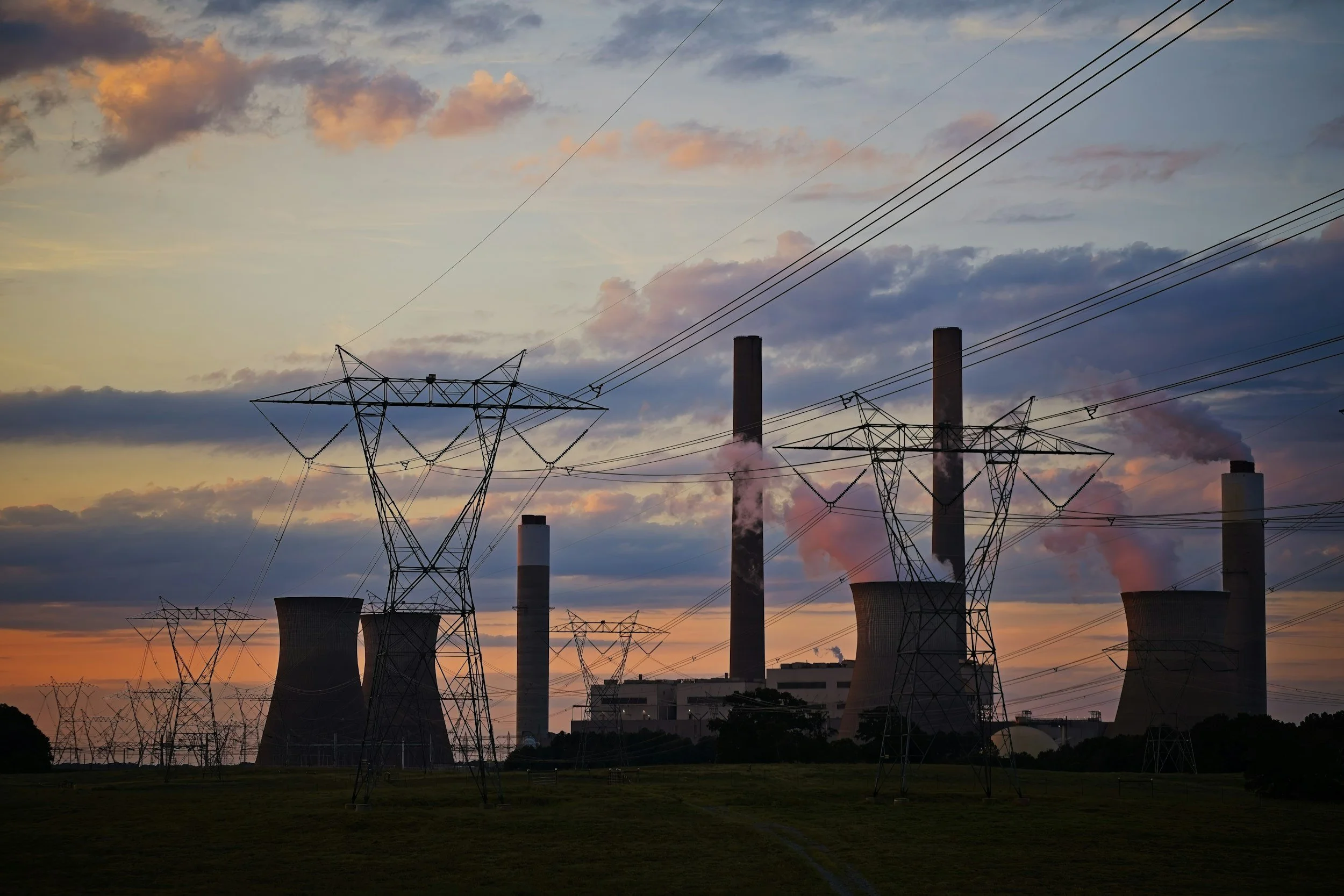
High voltage power lines leading out of Georgia Power's Plant Bowen, a coal-fired power plant just outside of Euharlee, Georgia against a colorful sunset. Credit: Jacob McGowin
Georgia Power told regulators that it expects rapid load growth in the coming years, much of it tied to new and proposed data centers. To meet that demand, the utility proposed adding thousands of megawatts of new generation. The plan that the PSC ultimately approved includes a significant build out of fossil fuel infrastructure. This includes new natural gas capacity, extending the life of existing coal plants, battery storage, and a comparatively modest amount of new solar generation that is not guaranteed and would be developed through an RFP process. Critics argue that the renewable component of the build out was limited relative to the scale of projected growth, and that the costs of fossil fuel infrastructure will be borne heavily by Georgia ratepayers.
The environmental stakes of that decision are substantial. New gas plants are long lived assets that can operate for decades. Once constructed, they commit the state to ongoing carbon emissions well into the future. Georgia had made progress in recent years expanding solar generation, but the current plan signals a renewed emphasis on fossil fuel capacity to guarantee reliability for large industrial loads. Such an expansion risks reversing momentum toward cleaner energy and locking ratepayers into higher emissions at a time when climate science calls for sharp reductions.
Consumer and environmental groups, including the Southern Environmental Law Center, Georgia Interfaith Power and Light, Southface, and Sierra Club, challenged the utility’s demand forecasts and the scale of the proposed expansion. They questioned whether all of the projected data center load will materialize and warned that overbuilding could leave residential customers responsible for billions of dollars in unnecessary infrastructure. Even PSC professional staff raised concerns during the process about the pace and scale of new capacity additions.
Despite those objections, the PSC approved the IRP. In the months that followed, advocacy groups filed a petition asking regulators to reconsider their vote and revisit the approval of new power plants tied to data center growth. Earlier this year, the commission declined to reopen the decision. The PSC has also adopted new rules intended to ensure that large energy users such as data centers bear more of the costs associated with their electricity demand, though others argue that this is not sufficient. Still, the broader generation expansion remains in place.
The result is a moment of tension in Georgia energy policy. On one hand, state leaders want to accommodate economic development and ensure reliability. On the other hand, the approved plan entails an extensive fossil fuel build out with long term emissions consequences and relatively limited new renewable investment compared to the growth in demand.
During the season of Lent, Catholics are invited into a season of examination and return. The Church calls us to repentance, to simplicity, and to renewed trust in God. We are asked to look honestly at our lives and consider where excess, comfort, and unexamined habits may be shaping us more than the Gospel.
Energy use is not only a technical matter. It reflects patterns of consumption and expectations of constant access, constant speed, and constant growth. Our digital lives feel weightless, yet they depend on physical infrastructure that draws heavily from the earth. When energy is treated as limitless, we risk dulling our awareness of dependence on creation and, ultimately, on the Creator.
In Laudato Si’, Pope Francis reminds us that ecological conversion involves both personal and communal transformation. Turning back to God includes reordering our desires and recognizing that creation is a gift, not an inexhaustible resource. Using energy without bounds harms the environment, but it can also shape our hearts toward excess rather than gratitude.
Lent offers an opportunity to ask hard questions. How much do we consume? What habits of convenience drive hidden costs for others and for future generations? How can we advocate for policies that reflect restraint, responsibility, and care for the common good?
Returning to God means aligning our daily choices and our public witness with a spirit of stewardship. As Georgia debates its energy future, we as Catholics are called to undergo conversion ourselves. Care for creation begins in the heart, then extends outward into the structures we build and the systems we sustain.